Search our Site


Home
About IDRA
Research
IDRA Newsletter
Education Policy
Press Room
IDRA News Sign Up
Newsletter Plus Login
Contact Us
Publications
Events
Laredo Early Childhood
Education Summit
Available Podcasts
Classnotes Podcast
Syndicate
RSS
Download our podcasts
directly to your Ipod


or listen directly by clicking here


Sunday, 20 July 2008

Coca-Cola Valued Youth Program
Program Elements

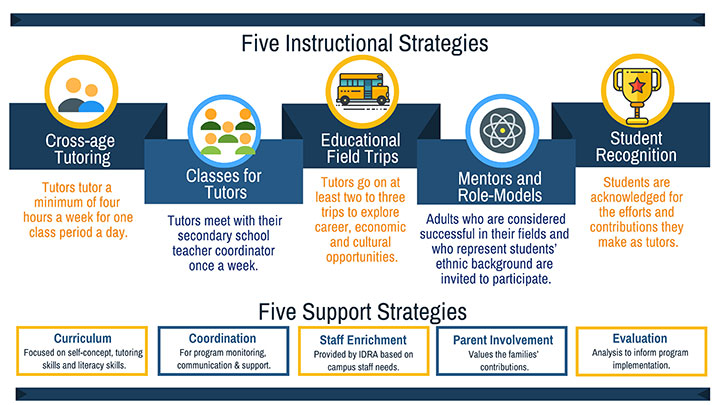
The philosophy of the Coca-Cola Valued Youth Program gives strength to its instructional strategies and support strategies.

Instructional Strategies

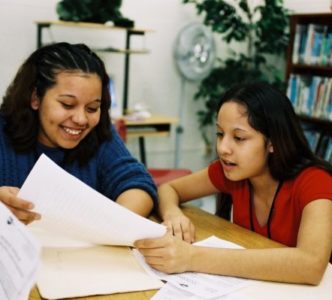
Classes for Tutors: Tutors meet with their secondary school teacher coordinator once a week in order to:

  • develop tutoring skills that enable them to become successful student tutors;
  • reflect on and celebrate their successes and contributions, thus developing self-awareness and pride; and
  • improve reading, writing and other subject matter skills enabling them to teach these skills to elementary school students.

This class, coupled with the actual tutoring sessions, which occur four times a week during the same class period, is offered as an elective or as a state or local credit course.

Tutoring Sessions: Tutors tutor a minimum of four hours a week for one class period a day. The student tutors earn a minimum wage stipend for their efforts and are expected to adhere to the employee guidelines of their host school. Their primary responsibility is to work in a one-to-three ratio with tutees. Tutoring young children (at least a four-year grade level difference) forces the tutors to use all their own experiences and apply them to the difficult task of teaching.

Educational Field Trips: At least two to three times throughout the year, students are invited to explore economic and cultural opportunities in the broader community. The field trips are an opportunity for career awareness by exposing the students to a variety of professional environments about which they would otherwise not have concrete insights. They can make more connections between what they are learning in school and what they will need to know to work as professionals.

“I’m the youngest of four kids, and I will be the first to graduate from high school. I would not be graduating if I wasn't a tutor.”
– middle school tutor

Mentor and Role-Models: Adults who are considered successful in their fields and who represent students’ ethnic background are invited to participate. A person who has overcome serious barriers can provide powerful modeling. Career and leadership awareness is developed through five guest speakers who model a variety of professions and experiences.

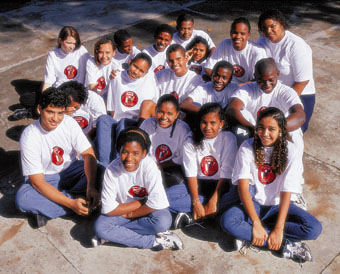
Student Recognition: Students are acknowledged for the efforts and contributions they make while fulfilling their responsibilities as tutors. Throughout the year, students receive certificates of merit and appreciation; are invited on field trips with their tutees; receive media attention and are honored at a luncheon or supper. Through these events, students experience the importance of their tutoring to the school, the district, and their community.

Support Strategies

Curriculum: A primary goal of the curricular framework is to prepare secondary school students to tutor elementary school students. The objectives of the curricular framework are improving the students’ self-concept, tutoring skills, and literary skills.

Coordination: Periodic meetings are held to coordinate all activities, facilitate communication among personnel and provide first-hand information for monitoring the program. Coordination is formalized through the Coca-Cola Valued Youth Program implementation team at each participating site. The team includes the teacher coordinators at the secondary school, the secondary school counselor, the evaluation liaison, the family liaison, an elementary school receiving teacher representative, and the principals of the participating schools.

Staff Enrichment: Training and other instructive or enriching experiences strengthen the individual program components. The Coca-Cola Valued Youth Program includes training and technical assistance by IDRA in response to the participants’ needs assessments. Staff enrichment is achieved through technical assistance and in-service.

Parent Involvement: Efforts to inform and involve families in the Coca-Cola Valued Youth Program communicate to the tutors’ families that the school takes their childrens’ education seriously and values the families’ contributions. Empowering minority and disadvantaged families requires vigorous outreach and meaningful school activities. Parent meeting and sessions, a minimum of four per year, are conducted bilingually or totally in the language of the parents.

Evaluation: The evaluation design for the Coca-Cola Valued Youth Program is one of the most rigorous and comprehensive in the country. Evaluation of the Coca-Cola Valued Youth Program, conducted by IDRA, serves to monitor program operations, develop corrective action as needed and document results of program implementation. Quantitative and qualitative measures are used to gauge students progress.

For more information on the program elements, see the program implementation booklet in pdf format.


Coca-Cola Valued Youth Program
Program Overview
Program Philosophy
Program Description
Research-Based Design
Program Elements
Evaluation Design
Recognition and Awards
Getting Started at Your School
Education Topics in this Web Site
How useful is this web site to you?
 
 © Intercultural Development Research Association  ·  5815 Callaghan Road, Suite 101 ·  San Antonio,Texas 78228
Phone: 210-444-1710  ·   Fax: 210-444-1714