IDRA Newsletter
March 2024 Issue of the IDRA Newsletter – This Issue’s Focus: School Safety

Articles
Students Demand Safe, Supportive Schools – Student Authors Call for Ending Zero Tolerance and School-Based Policing, by Paige Duggins-Clay, J.D.
Where Some Policymakers and School Leaders Get School Safety Wrong, by Morgan Craven, J.D.
Thirty Years Later, the 1994 Gun-Free Schools Act Continues to Harm Students and Communities, by Rebekah Skelton
 Extras
IDRA Valued Youth Partnership – See How VYP Improves Attendance & Socio-Emotional Learning
Bilingual Infographic: Build Safe Schools, Reject Hurtful Policies
Issue Brief: What Safe Schools Should Look Like for Every Student – A Guide to Building Safe and Welcoming Schools and Rejecting Policies that Hurt Students, by Morgan Craven, J.D.
IDRA Newsletter 2024 Index
Mar 28, 2024March 2024 Issue of the IDRA Newsletter – This Issue’s Focus: School Safety See PDF of this issue See eNews … read more
Read More

Thirty Years Later, the 1994 Gun-Free Schools Act Continues to Harm Students and Communities
Mar 27, 2024• By Rebekah Skelton • IDRA Newsletter • March 2024 • Thirty years after the passage of the Gun-Free Schools … read more
Read More
Where Some Policymakers and School Leaders Get School Safety Wrong
Mar 27, 2024• By Morgan Craven, J.D. • IDRA Newsletter • March 2024 • We know from a growing body of research … read more
Read More
Students Demand Safe, Supportive Schools – Student Authors Call for Ending Zero Tolerance and School-Based Policing
Mar 27, 2024• By Paige Duggins-Clay, J.D. • IDRA Newsletter • March 2024 • Thirty years after President Bill Clinton signed the … read more
Read More
IDRA Names Youth Advisory Board Members
Mar 27, 2024Five High School Students Serve as Advisors for Education Equity Initiatives While Learning New Skills (San Antonio • March 27, … read more
Read More
IDRA Newsletter 2023 Index
Mar 27, 2024November-December 2023 Issue of the IDRA Newsletter – This Issue’s Focus: 50th Anniversary – Year in Review See PDF of … read more
Read More
IDRA Youth Advisory Board Members Study Culturally Responsive Teaching and School Discipline
Feb 28, 2024• By Christina Quintanilla-Muñoz, M.Ed. • IDRA Newsletter • February 2024 • Four high school student researchers and alumni of … read more
Read More
Embedding Social-Emotional Learning into Student-Serving Programs
Feb 28, 2024• By Stephanie García, Ph.D. • IDRA Newsletter • February 2024 • The IDRA VisionCoders program anchors social-emotional learning at … read more
Read More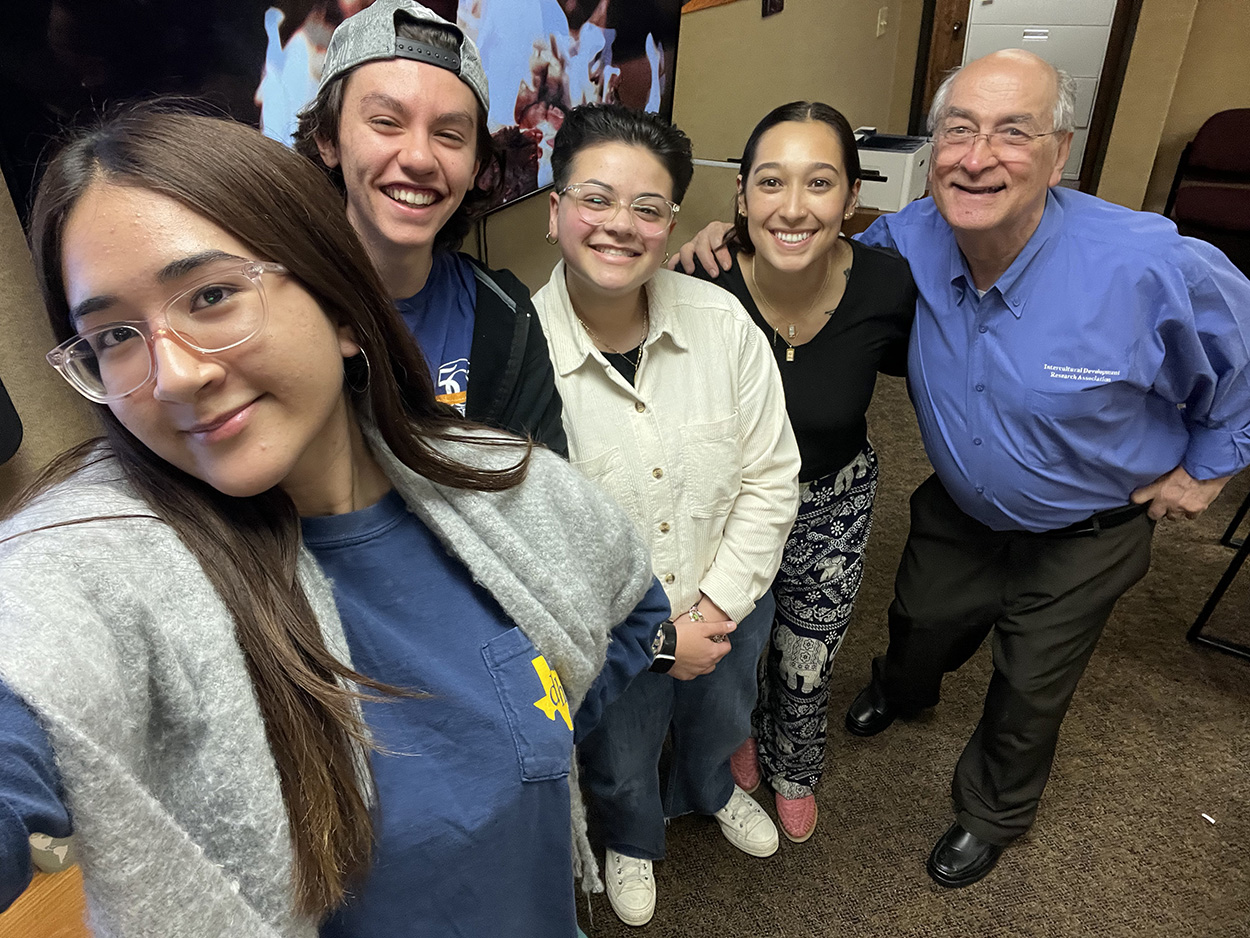
Mexican American Studies – A Deep Look by High School Students
Feb 28, 2024• By Marcela Hernández, Jonas Lokensgard & Hannah Rosales • IDRA Newsletter • February 2024 • Editor’s Note: In March … read more
Read More
Black Students Belong – The Case for an Afrofuturistic Education
Feb 26, 2024By Paige Duggins-Clay, J.D. • February 27, 2024 • I was proud to participate in the Thurgood Marshall Legal Society’s … read more
Read More
Books by Black Authors to Add to Your Classroom Library
Feb 23, 2024By Aurelio M. Montemayor, M.Ed. • February 27, 2024 • Access to books by Black authors highlight the importance of … read more
Read More
Going Back to that Beautiful History – In Defense of African American Studies
Feb 23, 2024By Terrence Wilson, J.D. • February 27, 2024 • Leaders, particularly in the Southern United States, are restricting students’ access … read more
Read More
Books by Black Authors for Your Classroom
Feb 23, 2024This Black History Month we are highlighting resources that you can add to your classroom libraries that include resources to … read more
Read More
Texas Censorship Law Leads to New Rubric for State-Approved Instructional Materials
Feb 12, 2024By Chloe Latham Sikes, Ph.D. • Knowledge is Power • February 12, 2024 • The Texas State Board of Education … read more
Read More
State Board of Education Punts Course Adoption Consideration for American Indian/Native Studies
Feb 12, 2024By Chloe Latham Sikes, Ph.D. • Knowledge is Power • February 12, 2024 • Advocates anticipated the Texas State Board … read more
Read More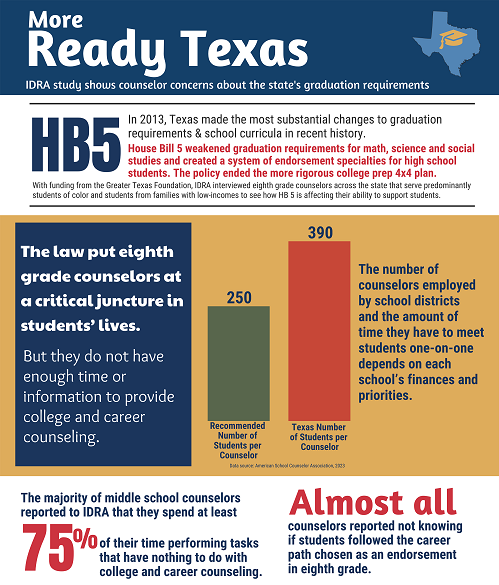
Texas School Counselors Point to Troubling State of College Advising – IDRA Studies the Role of Middle School Counselors in Supporting Students’ College Readiness
Jan 30, 2024• IDRA Newsletter • January 2024 • A decade after Texas policymakers weakened graduation requirements, middle school counselors struggle with … read more
Read More
Texas’ Ban on College Diversity, Equity and Inclusion Offices Takes Effect
Jan 30, 2024• By Chloe Latham Sikes, Ph.D. • IDRA Newsletter • January 2024 • The Texas legislature passed Senate Bill 17 … read more
Read More
Encouraging STEM Pathways through Student and Teacher Experiences
Jan 30, 2024• By Stephanie Garcia, Ph.D. • IDRA Newsletter • January 2024 • More than ever, there is a global priority … read more
Read More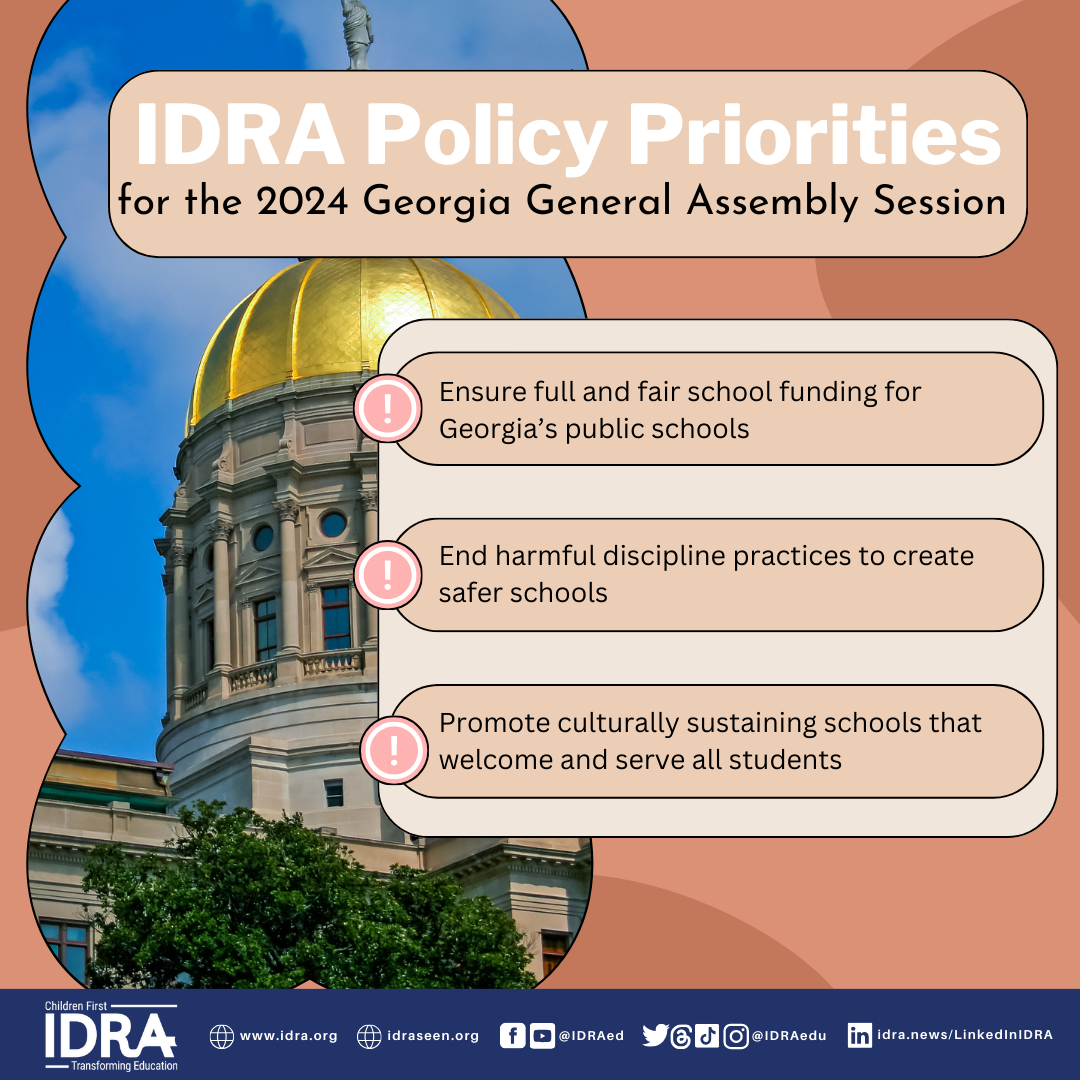
IDRA Priorities for the 2024 Georgia General Assembly Session
Jan 30, 2024• IDRA Newsletter • January 2024 • The Georgia General Assembly opened its 2024 session this month and will operate … read more
Read More
Envisioning a Bright Future for All Students
Dec 15, 2023• By Celina Moreno, J.D. • IDRA Newsletter • November-December 2023 • Listen to audio version: Standing on the Shoulders … read more
Read More