Students do not arrive at school in separate pieces. They bring their whole selves. School districts must build systems that can see, support and celebrate the whole child. Multilingual students with disabilities should not have to navigate separate systems for language and disability services.
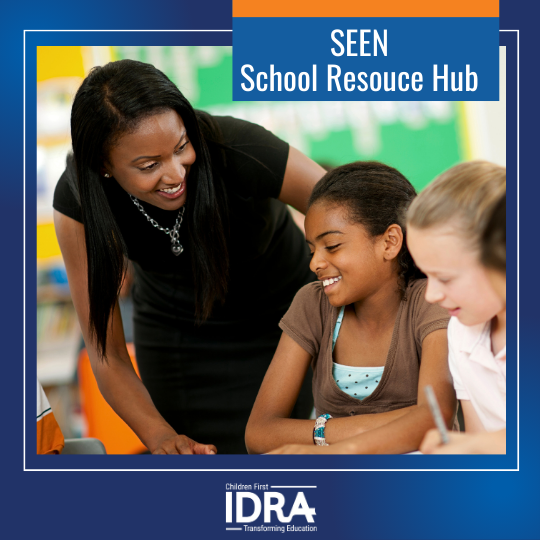
This infographic outlines five strategies for educators:
1. See the whole child – Multilingual students with disabilities are not separate pieces. Language, culture, communication and disability are all part of one whole learner.
2. Rethink evaluation – Stop asking, “Language or disability?” Use culturally and linguistically appropriate evaluation, multiple data sources and family input.
3. Provide both services – Students who qualify need both bilingual or ESL services and special education services, and those supports must be connected.
4. Fix MTSS – The Multi-Tiered Systems of Support (MTSS) framework that schools use to identify and assist students should support early help, not delay evaluation. Interventions must account for language development.
5. Partner with families – Translation provides access. Genuine partnership shares power. Families bring essential knowledge about their child.
See Where Language and Disability Meet – What Schools Must Do Differently, by Lizdelia Piñón, Ed.D., for more information.
See English-Spanish infographic PDF

 Recent Podcasts