IDRA Newsletter
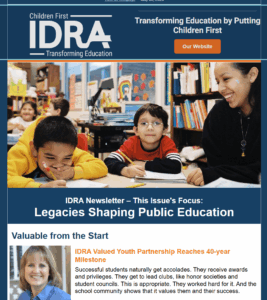
April 2025 Issue of the IDRA Newsletter – Focus: Legacies Shaping Public Education
Articles
Valuable from the Start – IDRA Valued Youth Partnership Reaches 40-year Milestone, by Christie L. Goodman, APR, Fellow PRSA
Tribute to Dr. Joe Bernal: How Bilingual Education Came to Texas – Behind the Scenes, by Christie L. Goodman, APR, Fellow PRSA
Because VYP Believed in Me, I Started to Believe in Myself – Former IDRA Valued Youth Partnership Student Reflects, by Michelle Ramos
Extras
IDRA Valued Youth Partnership Program – Student Reflection Contest eBook
IDRA VisionCoders – Student Reflection Contest eBook
IDRA Youth Leadership Now – Student Reflection Contest eBook
The Best Little Statehouse in Texas – 1981 CBS Emmy-winning documentary by legendary Texan, Larry L. King. (Bilingual education segment begins in Part 1 at 21 minutes and continues into Part 2.)
Coalitions Represent Communities Across the U.S. South
Jun 30, 2025Texas Legislative Education Equity Coalition The Texas Legislative Education Equity Coalition (TLEEC) is a collaborative of more than 38 organizations … read more
Read More

Civic Changemakers – Students and Advocates Join Forces at the Georgia Capitol
Jun 30, 2025• By Isabelle Philip • IDRA Newsletter • June – July 2025 • Students are natural experts on education policy, … read more
Read More
Policy Whiplash in Georgia – The 2025 Session Delivered Education Gains, Losses and Looming Threats
Jun 30, 2025• By Terrence Wilson, J.D., Mikayla Arciaga, M.A.Ed., DeAndrea Byrd, Isabelle Philip & Makiah Lyons, J.D. • IDRA Newsletter • … read more
Read More
Legislature Dances the Texas Three-Step: Defund, Demonize, Privatize Public Education
Jun 30, 2025• by Kaci Wright, M.Ed., & Vivek Datla, MPA • IDRA Newsletter • June – July 2025 • The 2025 … read more
Read More
IDRA Newsletter 2025 Index
Jun 23, 2025May 2025 Issue of the IDRA Newsletter – Focus: Legacies Shaping Public Education See PDF of this issue See eNews … read more
Read More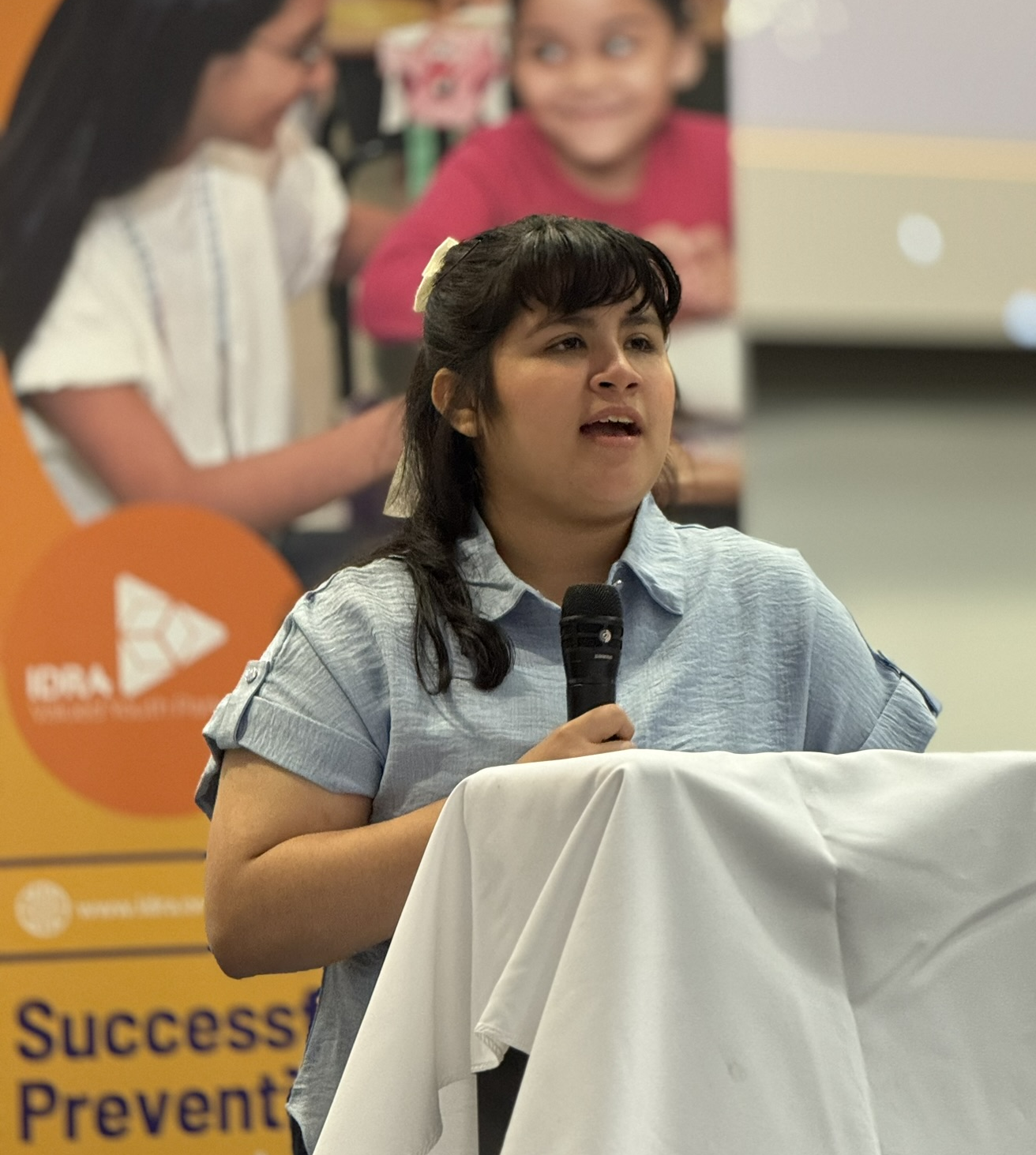
Because VYP Believed in Me, I Started to Believe in Myself – Former IDRA Valued Youth Partnership Student Reflects
May 30, 2025By Michelle Ramos • IDRA Newsletter • May 2025 • Editor’s Note: In April, IDRA celebrated the 40th anniversary of … read more
Read More
Tribute to Dr. Joe Bernal: How Bilingual Education Came to Texas – Behind the Scenes
May 30, 2025• By Christie L. Goodman, APR, Fellow PRSA • IDRA Newsletter • May 2025 • The recent passing of Joseph … read more
Read More
Valuable from the Start – IDRA Valued Youth Partnership Reaches 40-year Milestone
May 30, 2025• By Christie L. Goodman, APR, Fellow PRSA • IDRA Newsletter • May 2025 • Successful students naturally get accolades. … read more
Read More
Georgia’s Education Budget Funds Vouchers First, Mental Health and Poverty Support Second
May 08, 2025• By Mikayla Arciaga, M.A.Ed. May 8, 2025 • Education funding was at the forefront of conversations about schools this … read more
Read More
Partners Pushed Against Key Bills Affecting Education and Youth
May 08, 2025• By Isabelle Philip May 8, 2025 • There were many bills moving this past legislative session in Georgia affecting … read more
Read More
IDRA Equipped Georgia Advocates to Defend Public Education
May 08, 2025• By DeAndrea Byrd & Isabelle Philip • May 7, 2025 • Here is a run-down of IDRA’s work during … read more
Read More
Diversity, Equity and Inclusion Ban Defeated in Georgia – For Now
May 07, 2025• By Isabelle Philip • May 7, 2025 • Georgians have been faced with legislation that threatens teaching truth and … read more
Read More
Georgia Charter Legislation Passes, Voucher Expansion Stalls
May 07, 2025• By Mikayla Arciaga, M.A.Ed. May 7, 2025 • Education funding was at the forefront of conversations about schools this … read more
Read More
Long Debate on School Safety and Discipline Results in Mixed Bag Legislation
May 07, 2025• By Terrence Wilson, J.D.• May 7, 2025 • In response to the tragic shooting at Apalachee High School in … read more
Read More
The Ever-Present History of Violence in U.S. Schools – How State-Sanctioned Cruelty Persists through School Corporal Punishment Policies
Apr 29, 2025• By Morgan Craven, J.D. & Kaci Wright • IDRA Newsletter • April 2025 • On April 30, we observed … read more
Read More
On the State of Integration and Our Common Humanity
Apr 29, 2025• By Paige Duggins-Clay, J.D. • IDRA Newsletter • April 2025 • Editor’s Note: In February 2025, the National Coalition … read more
Read More
Developing the Joy of STEM through Student and Teacher Experiences
Apr 29, 2025• By Jeff Wheatcraft, Asaiah Puente, Ed.D., CNP, & Stephanie Garcia, Ph.D. • IDRA Newsletter • April 2025 • As … read more
Read More
High School Student Tells Lawmakers: Georgia Bill “Erases Our Stories and Our Truths”
Apr 29, 2025Editor’s note: In February, Laila Errold participated in IDRA’s advocacy training and shadowing event at the Georgia capitol. As she … read more
Read More
What 2024 NAEP Scores Tell Us About Student Progress
Mar 26, 2025National Scores Suggest Need for Targeted Investments to Ensure All Students Succeed • By Morgan Craven, J.D. & Chloe Latham … read more
Read More
The U.S. Department of Education’s Role in Serving and Protecting this Nation’s Students
Mar 26, 2025• By Vivek Datla, MPA • IDRA Newsletter • March 2025 • The U.S. Department of Education is at the … read more
Read More